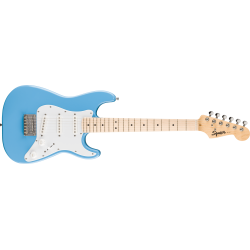
WHAT TO EXPECT FROM A SQUIER STRATOCASTER
A Strat is a very rewarding guitar both for learning and for playing a wide variety of styles. It is comfortable against the body, usually encourages you to practise because it does not feel heavy, and its sound works very well both clean and with pedals. That is why it is such a typical choice for beginners, but also for players who want a practical guitar for rehearsals, lessons or even simple live gigs.
In day-to-day use, what really matters is that the guitar feels comfortable to you: that the neck sits well in your hand, that the playing position feels natural, and that the rest of your setup, meaning amp plus pedals if you use them, works with it. With a Strat, a good clean sound and an overdrive already take you a long way for pop, indie, blues and rock.
WHICH RANGE TO CHOOSE: SONIC, AFFINITY OR CLASSIC VIBE
The difference between these ranges is mainly about how you plan to use the guitar and what kind of purchase you want to make: one to get started right away, one to grow into with more room to develop, or one aimed at players looking for a more classic flavour.
Squier Sonic: A Great Way to Start
If you are just getting going, the Sonic is the simplest option. It lets you start playing from day one and focus on what really matters, which is practising. It is a very good fit for home use, lessons and first songs, without getting lost in too many technical decisions. It is the kind of guitar you recommend when the goal is simply to start now and improve step by step.
Squier Affinity: Balance for Progressing
Affinity is for players who want to step up to a guitar that feels more complete from the beginning. If you already know you are going to take playing seriously, rehearse with other people or want an instrument with more long-term room to grow, this is usually the range people choose.
Squier Classic Vibe: Classic Approach and Vintage Feel
Classic Vibe is aimed directly at players looking for a Strat with a more traditional look and feel. If you like the kind of sound that works well for funk, pop, blues or classic rock, or you simply want a guitar that inspires you to play and pay attention to the details, Classic Vibe models are usually the right choice. It is a very suitable range for players who already know they want that more traditional character.
HOW TO CHOOSE QUICKLY BASED ON HOW YOU WILL USE IT
Before getting into too much detail, think about where you are going to use the guitar and what you expect from it. That alone usually makes the choice much easier.
If It Is Your First Electric Guitar
- Comfort: the neck should feel natural in your hand, and the guitar should not wear you out.
- Ease of practice: a well-adjusted guitar feels better to play and keeps you motivated.
- A realistic setup: a decent amp combined with a guitar that sounds good makes learning feel much more natural.
Practical tip: if you can, get an initial setup done to your liking, especially string height and intonation. That kind of thing changes the experience more than almost any theory ever will.
If You Want a Guitar to Progress and Rehearse With
- Response with pedals: a Strat is a very good foundation for using overdrive, chorus, delay or reverb.
- Versatility: if you play different styles, a Strat saves you from needing to change guitars all the time.
- Stability: this is where the Affinity and Classic Vibe ranges often make a lot of sense, because they tend to stay with you better once you start playing more hours and asking more from the instrument.
If You Are Thinking About Live Gigs or Rehearsal Rooms
In live use, simplicity matters. A Strat with a good clean tone, an overdrive and a delay can cover a whole setlist without making life complicated. And if you use the tremolo arm, what really matters is not the arm itself but making sure the guitar is well set up and the strings are properly settled.
Standout Models in This Category
If you want to go straight to the point within these three ranges, these models are very clear references:
WHY CHOOSE A SQUIER STRATOCASTER
- It is a guitar you can grow with: good for getting started, but also capable of taking you further without feeling limiting too soon.
- It is comfortable: if you are going to practise regularly, ergonomics make a difference from the very first week.
- It is versatile: it works across many styles and gets along very well with pedals.
You have three very clear ranges: Sonic for getting started, Affinity for progressing, and Classic Vibe for a more classic approach.
FAQ
Which one would you recommend if it is my first guitar?
Usually Sonic or Affinity, depending on your budget. The key thing is that it feels comfortable and is well adjusted, so practising feels easy and enjoyable.
Is it worth moving up from Sonic to Affinity?
If you are going to play more hours, rehearse or want a more complete feel from the beginning, Affinity is usually worth it. If your goal is simply to start now and learn, Sonic does the job perfectly well.
Is Classic Vibe only for classic styles?
No. Even though it has a more vintage-oriented approach, it works brilliantly for pop, indie and rock too. It simply appeals especially to players who like that more traditional character.
Can a Squier Strat handle rock with distortion?
Yes. With a good pedal and the right amp, you can absolutely get solid rock tones from it. For higher gain sounds, it helps to set up the rig well and keep noise under control.
Which pedals usually work best with a Strat?
An overdrive to push the amp, then delay and reverb for depth. If you like textured clean sounds, chorus also works very well.
What should I do as soon as I buy it?
Check the setup, especially string height and intonation, and choose a comfortable string gauge. That is the fastest way to notice the guitar feeling better in your hands.