HOW TO CHOOSE YOUR FIRST BASS GUITAR?
When choosing a beginner bass, prioritize comfort, an appropriate string count, and an instrument that suits the music you want to learn. You don't need the most complex model: during the early stages, it is far more important that you can easily reach the frets, maintain a comfortable posture, and practice with ease.
If you want to dive deeper into pickups, scale length, gear, and other buying considerations, check out our guide on how to choose your first bass guitar.
4- OR 5-STRING BASS TO START WITH?
For most beginners, a 4-string bass is the easiest starting point. It is the standard setup and lets you learn fundamental hand positions, scales, basslines, and common techniques without adding an extra string to manage.
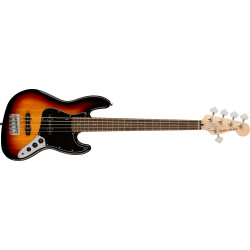
A 5-string bass can make sense if you know right from the start that you need a lower register for the style or repertoire you want to play.
| Configuration |
Focus |
Main Advantage |
It might interest you if... |
| 4 strings |
Standard setup |
Straightforward approach for learning positions and basic technique |
You are looking for your first bass and don't need an extra lower register |
| 5 strings |
Extended range |
Adds an extra low string in standard tuning |
Your musical style or repertoire frequently uses lower notes |
Starting with five strings isn't wrong, but if you don't have a specific musical need yet, four strings usually simplifies early learning.
34" SCALE OR SHORT SCALE BASS FOR BEGINNERS?
Scale length is the effective vibrating length of the strings. On electric bass, 34 inches is the most common standard scale length, but it is not the only great option for learning.
Standard Scale
The 34" scale is the standard benchmark for electric basses and offers a vast variety of models. It is perfectly suitable for beginners if the instrument's physical size feels comfortable to you.
A shorter neck reduces the distance between frets and can make reaching notes easier on your fretting hand. It appeals to young bassists, players with smaller hands, or anyone who prefers a more compact instrument.
Which one to choose?
There is no mandatory scale length for beginners. If you can play comfortably on a 34" scale, you don't need to go smaller; if the neck feels too long, a short-scale bass can make adapting much easier.
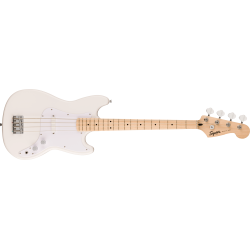
A short-scale bass is not strictly a kids' instrument. Compact models like the Ibanez Mikro or certain Precision and Mustang basses are also used by adult players who prefer that specific feel and response.
PRECISION BASS, JAZZ BASS, OR PJ TO START WITH?
Pickup type and combination influence the bass's overall character and tone-shaping options. For a beginner, all three configurations work great: the choice depends mostly on the sound you're after and whether you prefer a simpler setup or more blending options.
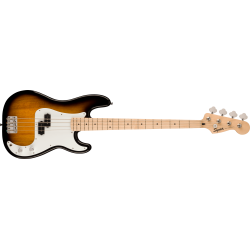
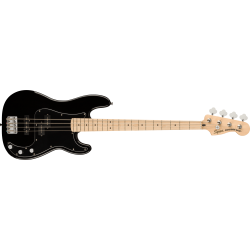
The Precision design typically uses a split-coil pickup and simple controls. It's a classic choice if you want a punchy, full-bodied tone with straightforward electronics and fewer decisions to make while learning.
A Jazz Bass typically uses two single-coil pickups, allowing you to blend their signals for different tonal responses. It's great if you want to explore versatile tonal nuances directly from the instrument's controls.
PJ Configuration
Combines a Precision-style neck pickup with a Jazz-style bridge pickup. It's a versatile choice if you don't have a defined signature sound yet and want to explore diverse tones on a single bass.
You don't need to pick based strictly on music genre. Precision, Jazz, and PJ basses appear across all kinds of styles, and any of them can see you through your initial learning stages.
WHAT BASS BRANDS CAN YOU CHOOSE TO START WITH?
Ibanez, Fender Squier, and Yamaha are currently among the most prominent brands in our beginner lineup, offering quite distinct design philosophies.
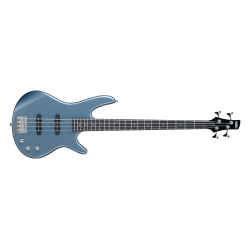
Ibanez offers an exceptionally wide range for beginners. Across families like GIO, Talman, and Mikro, you'll find 4- and 5-string basses, standard scale lengths, and compact short-scale options.
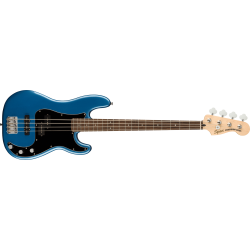
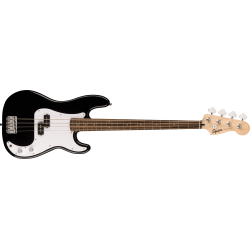
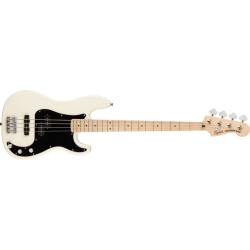
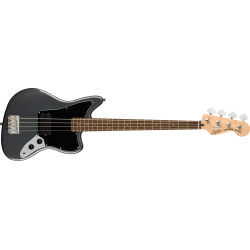
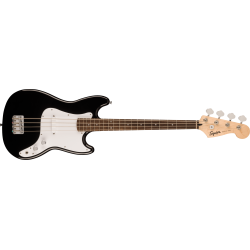
Squier allows you to start with classic designs like the Precision Bass or compact choices like the Mini Precision. Series like Sonic and Affinity provide accessible options at entry-level price points.
The TRBX family includes instruments designed to access electric bass with a modern feel. Models like the TRBX174 pair a versatile PJ pickup setup with easy-to-use electronics.
WHAT ELSE DO YOU NEED BESIDES A BASS TO GET STARTED?
To hear an electric bass guitar properly, you'll need some form of amplification system. Your core setup can stay fairly simple—you don't need to start buying effect pedals right away.
For home practice, you don't necessarily need high wattage. What matters is using a solution designed to reproduce low frequencies accurately at your target practice volume.
Cable and Tuner
You will need an instrument cable to connect to an amp and a tuner to check your tuning regularly. These are two essential items right from your very first practice sessions.
Strap and Picks
A strap is necessary for playing while standing up. Picks are optional: you can learn using fingerstyle, a pick, or both techniques depending on the tone and musical style you want to play.
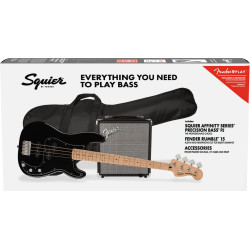
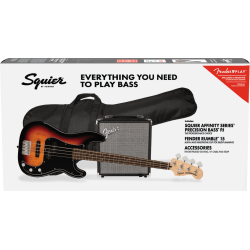
If you don't have a bass, amp, or accessories yet, you can also consider our electric bass starter packs, which bundle everything you need to get playing in a single purchase.
Pedals and effects can always be added later on. They aren't necessary for learning the fundamentals of the instrument.
FREQUENTLY ASKED QUESTIONS ABOUT BEGINNER BASS GUITARS
What is a good bass guitar for a beginner?
A good beginner bass should be comfortable, hold its tuning reliably, and feature a neck you can navigate without excessive straining. For most beginners, a 4-string model is the simplest starting point, though scale length and pickup type can be selected based on player preference.
Is a 4- or 5-string bass better to start with?
For most beginners, four strings simplifies early learning and lets you play a wide range of musical styles. A five-string bass can be a smart choice if you know from day one that you need the extra low notes provided by the low B string.
Is a short-scale bass better for beginners?
Not necessarily. The standard 34" scale length can be completely suitable for learning. Short scale reduces the distance between frets and can feel more comfortable for smaller hands, younger bassists, or players who simply prefer a more compact instrument.
Precision Bass or Jazz Bass to start with?
Both make great first instruments. The Precision Bass usually offers simpler electronics and a full, punchy sound, while the Jazz Bass allows you to blend two pickups and explore more tonal variations from the instrument. Playability and your sound preferences matter more than the name of the design.
Do I need an amplifier to learn to play the bass?
To properly hear an electric bass guitar, you need an amplifier or an equivalent compatible solution. Practicing exclusively unplugged makes it difficult to clearly hear dynamics, string noise, and true note clarity.
Is an active or passive bass better for beginners?
Both are great for learning. A passive bass typically offers simpler controls and doesn't require a battery to power an internal preamp. An active bass can offer broader EQ shaping options right on the instrument. For a beginner, comfort and tone should carry more weight than choosing strictly between active or passive.