HOW TO CHOOSE A BEGINNER ELECTRO-ACOUSTIC GUITAR?
A good beginner electro-acoustic guitar should be comfortable to play unplugged and offer a straightforward connection when you need to use its electronics. When choosing, look first at body size and shape, followed by features like the preamp, cutaway, and available controls.
The main advantage over a standard non-electric acoustic is that you can use it the exact same way for practicing at home and, when the time comes, plug it into an acoustic amp, PA system, or compatible audio interface.
DO YOU REALLY NEED AN ELECTRO-ACOUSTIC GUITAR?
You don't need electronics to learn acoustic guitar. The difference comes down to what you want to do with the instrument besides practicing.
For practicing at home
If you just want to learn chords, strum, and practice without amplification, a conventional acoustic guitar is plenty. In that case, you can also check out our beginner acoustic guitars.
For lessons, rehearsals, or performances
An electro-acoustic makes sense if you want the ability to easily plug in whenever you need more volume. You can keep practicing unplugged and only use the preamp when necessary.
For recording
The guitar output allows you to connect to compatible recording gear. This offers a practical alternative for tracking the instrument's signal without relying strictly on placing a microphone in front of it.
WHAT TYPE OF BODY SHOULD YOU CHOOSE TO START?
The body influences both comfort and the instrument's acoustic response. You'll find different shapes in this category, so it's worth choosing the one that best suits your playing posture first.
| Shape |
General Characteristics |
It might interest you if... |
Examples in this category |
| Dreadnought |
Large acoustic body with strong presence and projection |
You want to accompany with chords and strumming, and a larger body feels comfortable to you |
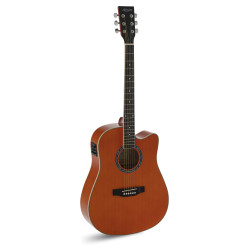
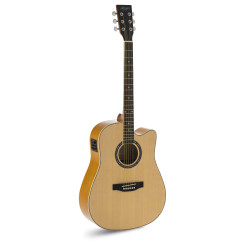
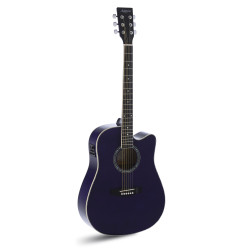
Admira Tennessee / Ibanez PF15ECE |
| Mini Jumbo |
An alternative with a different outline than the Dreadnought format |
You prefer the ergonomics and shape of a Mini Jumbo body |
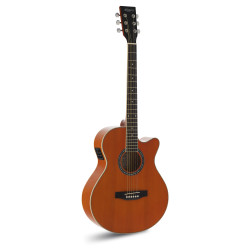
Admira Indiana |
| Grand Concert |
More compact format than a traditional Dreadnought |
You want to prioritize more manageable dimensions |
Ibanez PC12MHCE |
There is no single mandatory shape for beginners. A Dreadnought can be perfectly comfortable for one guitarist and feel too bulky for another. If this is your first guitar, comfort while holding it seated and reaching the neck should carry more weight than picking a body shape strictly by name.
WHAT IS AN ELECTRO-ACOUSTIC GUITAR PREAMP?
The electronic system captures the guitar signal so it can be sent to external gear. The preamp lets you control and shape that signal before it leaves the instrument.
Volume control
Allows you to adjust the signal level sent to an amplifier, PA system, or compatible setup directly from the guitar itself.
Tone controls
Depending on the model, the preamp may include EQ settings to tweak bass, treble, or other frequencies before outputting the signal.
Built-in tuner
Some preamps feature an onboard tuner, a very convenient feature for lessons, rehearsals, and gigs because it lets you quickly check tuning right on the guitar.
You don't need the most complex preamp to get started. For a beginner, having a comfortable, well-set-up guitar is usually much more important than having endless electronic controls.
IS A CUTAWAY IMPORTANT ON A FIRST ELECTRO-ACOUSTIC?
The cutaway is the scooped notch where the neck meets the body, making it easier to reach higher frets. The vast majority of models in this selection include one.
It isn't necessary for learning basic chords, accompaniments, or strumming patterns, but it can come in handy as you progress and start playing melodies or solos further up the neck. That makes it a nice feature to have, though it shouldn't be the primary criteria for choosing your first guitar.
DO YOU NEED AN AMP FOR AN ELECTRO-ACOUSTIC GUITAR?
You do not need an amplifier to learn or play an electro-acoustic guitar at home. The guitar generates sound acoustically and can be played completely unplugged.
You will only need amplification when you want to use its electronics for more volume. Depending on your setup, you can use a dedicated acoustic guitar amp, a PA system, or other compatible gear. You can also connect certain models to an audio interface to record the signal.
WHAT OPTIONS WILL YOU FIND AMONG ENTRY-LEVEL ELECTRO-ACOUSTICS?
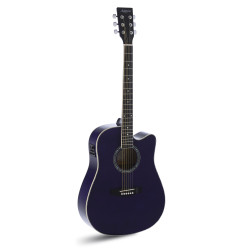
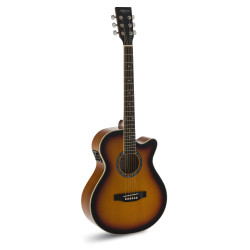
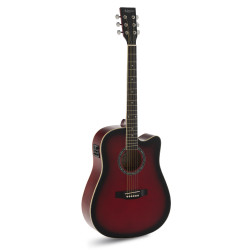
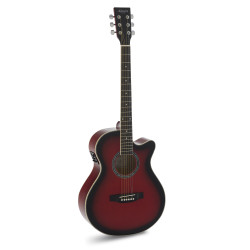
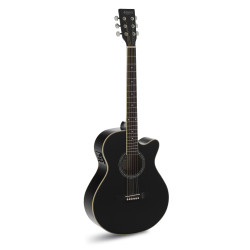
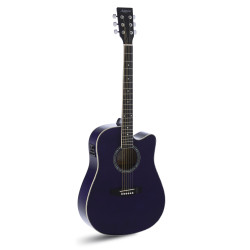
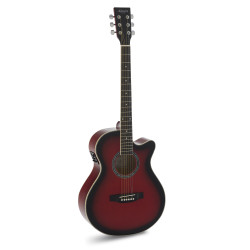
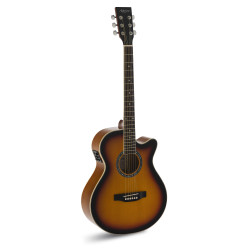
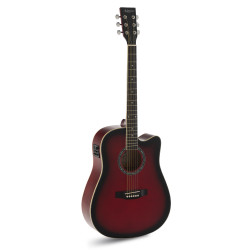
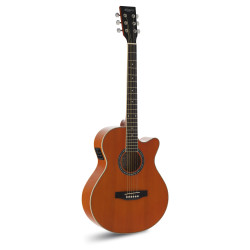
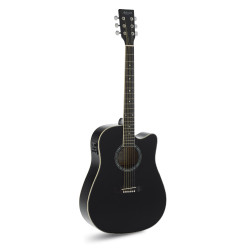
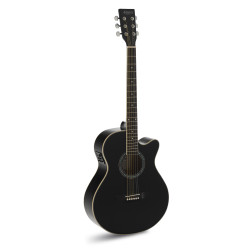
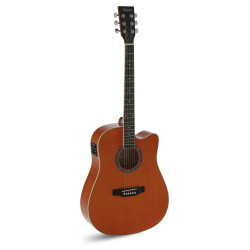
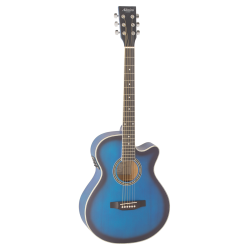
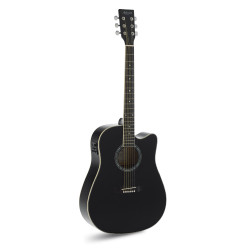
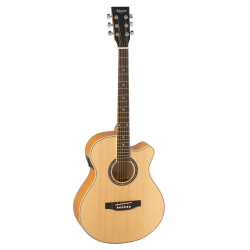
Our current selection is heavily focused on beginner Admira electro-acoustic guitars. Within their Acoustics series, you can choose between the Tennessee Dreadnought and the Indiana Mini Jumbo, available in multiple colors and finishes.
You'll also find Ibanez alternatives with different designs. The PF15ECE features a Cutaway Dreadnought body, while the PC12MHCE uses a somewhat more compact Cutaway Grand Concert shape. Both include an Ibanez AEQ-2T preamp with an onboard tuner.
FREQUENTLY ASKED QUESTIONS ABOUT BEGINNER ELECTRO-ACOUSTIC GUITARS
Is an electro-acoustic guitar good for beginners?
Yes. You can learn and practice on it exactly the same as with a standard acoustic guitar without ever plugging in. The benefit is having built-in electronics ready whenever you want to amplify, play live, or connect to other audio gear.
What is the difference between an acoustic and an electro-acoustic guitar?
Both produce sound acoustically. The main difference is that an electro-acoustic incorporates electronics that allow you to send its signal to an amp, PA, audio interface, or other gear. Unplugged, it plays just like a conventional acoustic.
Do I need an amplifier to start with an electro-acoustic?
No. You can practice and study unplugged because the body produces sound acoustically. An amp is only necessary when you want to make use of its electronics for extra volume.
What is an electro-acoustic guitar preamp?
The preamp is part of the electronic system that conditions the signal before sending it to external equipment. Depending on the model, it can include volume controls, EQ, and extra features like a built-in tuner.
Do I need a cutaway to start?
No. A cutaway makes reaching upper frets easier, but it isn't necessary for learning basic open chords and strumming. It becomes helpful as you advance and begin using higher fretboard positions.