
How to Choose Your First Bass: A Complete Guide to Finding the Right Instrument

Choosing the right electric bass can be quite a challenge, but at Mat Guitars we do our best to make the process easier and more enjoyable.
Whether you are just starting out in the world of bass or you are already an experienced player, our wide catalogue has the right bass for you.
In this guide, we will focus on choosing your first bass, although the criteria we share can be applied at any level.
- 1. What style of music do you want to play?
- 2. What do you need to start playing?
- 3. The size of your bass
WHAT STYLE OF MUSIC DO YOU WANT TO PLAY?
The first thing we need to think about when choosing our first bass is simple: what kind of music would we like to play?
Most of the time, we try to find a versatile bass that can work across different genres, although there are certainly basses that are better suited to specific styles.
PICKUP CONFIGURATION
Besides the woods and the overall shape of the instrument, another key factor to consider is the pickup configuration. Depending on the type of pickup, we will get very different sounds.
There are three main pickup types:
Single Coil: A single-coil pickup is made up of a single coil wrapped around a magnet. Visually, they are easy to recognise because they are usually narrow and elongated. Their characteristic sound is clear, bright and defined, making them ideal for clean tones.
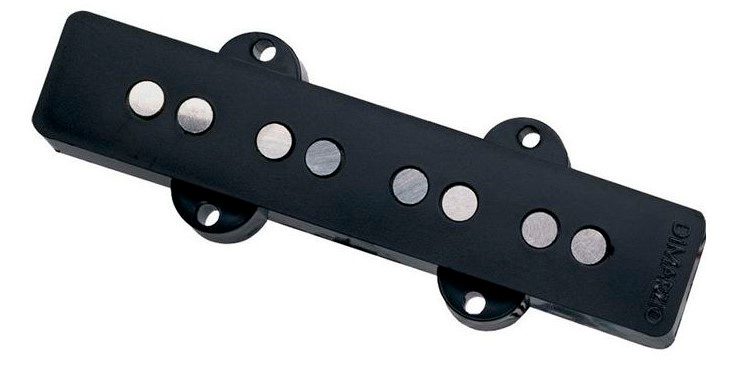
Split Coil: A split-coil pickup is based on two smaller coils around a magnet, each roughly half the size of a single-coil pickup. Since they work together as a pair, they can also be considered a type of dual-coil pickup. Their characteristic sound is deeper and darker.
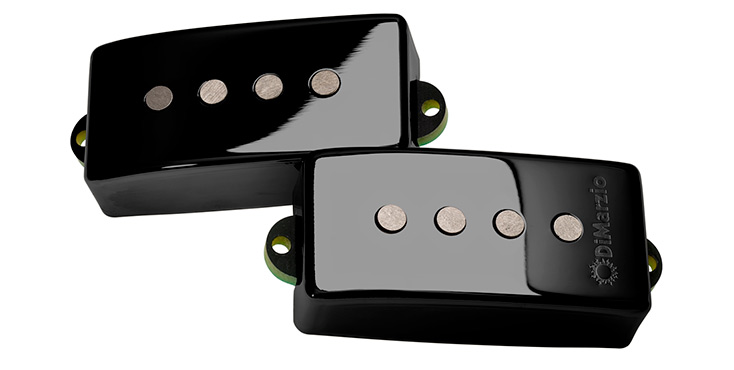
Humbucker: A humbucker is a pickup with two coils connected in series around a magnet. It is characterised by having twice the magnetic poles of a single-coil pickup. In this case, the sound is less bright, with a stronger output level and a greater emphasis on midrange frequencies.
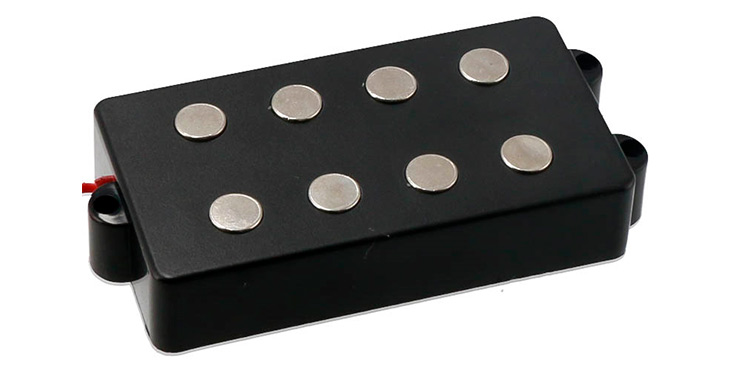
Once we understand the kind of sound each pickup produces, we also need to bear in mind that different pickup configurations work especially well for certain styles.
POP / BLUES / FUNK
In these styles, bass tones usually range from clean and clear sounds to light saturation that adds the right kind of dynamics. If this is your style, you will probably want a bass with single-coil pickups.
Jazz Bass-style instruments are ideal for these styles because their single-coil pickups deliver articulate and well-defined clean sounds.
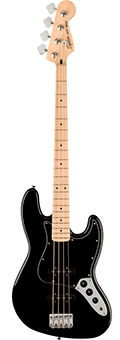 |
Fender Squier Affinity Jazz Bass MN Black
|
At Mat Guitars, we are convinced that the Jazz Bass is one of the best models for starting out on bass, thanks to its sound and versatility. It is an instrument that fits perfectly into a wide variety of styles.
ACTIVE BASS
Some basses include a preamp, usually powered by a 9V battery, or sometimes two. This preamp allows you to shape your sound and get a more powerful tone by boosting the signal output.
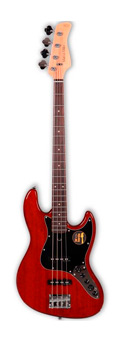 |
Marcus Miller V3 2nd Generation Mahogany
|
ROCK / HARD ROCK
In these styles, bass sounds often include more grit and distortion. For this kind of sound, a split-coil pickup is usually ideal, as it emphasises the low frequencies and delivers a warm tone with strong output.
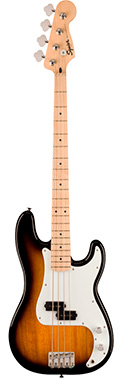 |
Fender Squier Sonic Precision Bass 2TS
|
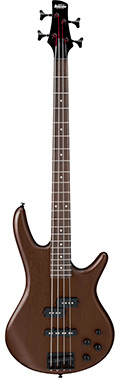
For these styles, a PJ pickup configuration can also work very well, combining the low-end strength of a split-coil pickup with the definition of a single-coil pickup. At Mat Guitars, we can offer a couple of very interesting options in this area.
 |
|
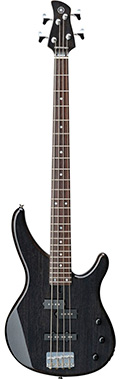 |
Yamaha TRBX174EW Translucent Black
|
METAL / PROG
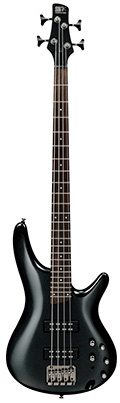
For more aggressive and darker styles, basses with dual-coil humbucker pickups are often the best option, as they provide a stronger signal with more gain. This means your sound can handle heavier saturation without losing punch.
Another important thing to keep in mind is the string action, or string height. This will have a direct impact on playing comfort, and it is something that can be adjusted on all basses.
Brands such as Jackson, Marcus Miller and Ibanez offer this kind of bass, combining the features mentioned above with an aesthetic that matches the style.
Here are a few good options for these genres:
 |
|
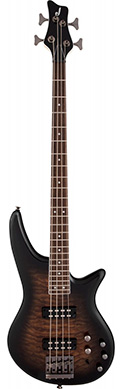 |
Jackson JS3Q Spectra Dark Sunburst
|
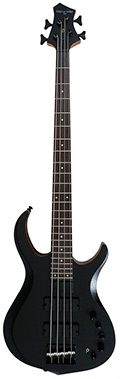 |
Marcus Miller M2-4 2nd Generation Black
|
WHAT DO I NEED TO START PLAYING?
Besides the bass itself and an amplifier, you will need an instrument cable, a strap and picks if you use them. And of course, plenty of practice.
AMPLIFIER
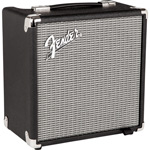
The amplifier is an essential part of your sound. It allows you to shape your tone according to your taste and your needs.
One of the things to think about is how much power you will actually need. If you are simply looking for something to begin practising with, you will not need a high wattage amp.
 |
|
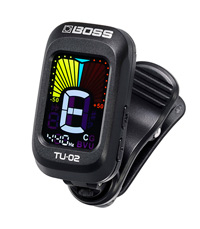
TUNER
A tuner is essential for playing bass, especially when you are getting started. Keeping your bass in tune will help you sound better and practise more accurately.
One of the most practical and widely used formats is the clip-on tuner:
 |
|
These tuners work by vibration, so your bass does not need to be plugged in to tune it.
CABLE
The last thing you need is a way to connect your bass to the amplifier. This is done with a standard jack-to-jack cable.
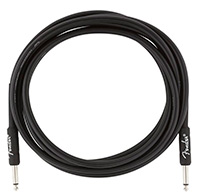 |
Fender Professional Series Instrument Cable 3 m Black
|
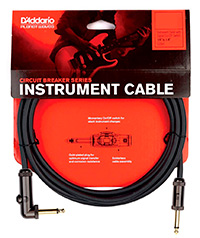
The better the cable, the better its durability and resistance to damage, as well as its signal transmission.
There is no need to start with a premium cable. What really matters at first is learning how to take care of it properly and coil it correctly.
Here is an example of a high-quality cable:
 |
|
EFFECTS
Effects are an important part of the world of music. They allow us to create sounds and textures that would be impossible in a purely acoustic way.
On bass, one of the most common effects is overdrive or distortion, which saturates the signal and gives the sound more character and presence.
There are also modulation and ambience effects such as chorus, delay, flanger and reverb. These kinds of effects add movement and depth to your bass signal.
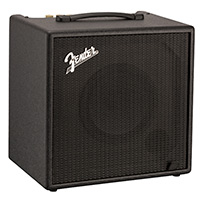
Some amplifiers already come with built-in digital effects, which makes practice more fun. One example is the Fender Rumble LT25.
 |
|
Effects are also available in pedal format, whether as individual units or multi-effects pedals.
If you are just getting started, we recommend choosing either an amplifier with built-in effects or a compact multi-effects pedal.
Although multi-effects pedals may not always match the quality of individual stompboxes, they are a great way to explore the different kinds of effects available and later decide which ones are most useful to you.
 |
|
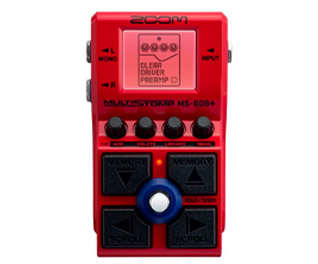
The Zoom MS-60B+ is a very interesting option for players who want to start exploring the world of bass effects in a compact and easy-to-integrate format. Its effect library is specifically designed for bass, which makes it very useful for experimenting with modulation, ambience and signal processing without overcomplicating your setup.
THE SIZE OF YOUR BASS: SCALE LENGTH
Scale length refers to the distance between the saddle and the nut, the two contact points of the string. A longer scale changes the way the string vibrates, and this is one of the reasons why basses have longer necks than guitars.
The standard scale length for electric bass is 34", and that is generally the most recommended option for beginners.
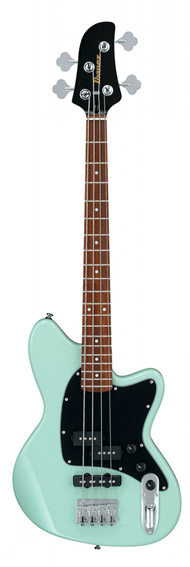
Short-scale basses measure 30", which gives them a different feel and response. They are often more comfortable to play and are especially suitable for players with smaller hands or anyone looking for a more manageable instrument.
There are different ranges and models of short-scale basses.
 |
|
 |
Fender American Professional II Mustang Bass RW 3-Color Sunburst
|
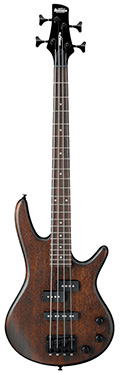
There are also even smaller basses, known as mini basses. These instruments are ideal for children. Brands such as Squier and Ibanez offer this kind of model, allowing players to get started with bass from a very early age.
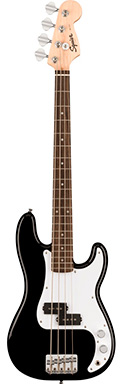 |
Fender Squier Mini Precision Bass Black
|
 |
|
We conclude by showing you a selection we have put together at Mat Guitars of basses for beginners.



 English
 Español