
12 Acoustic and Electro-Acoustic Guitars We Recommend for Your Style and Budget

If you are after the best value acoustic guitar, start with a Fender CD-60S or a Yamaha FG800II: a solid spruce top for around €200-320. If you will be playing plugged in, the LAG T170DCE is the best-selling electro-acoustic in this list. And if you want a guitar for life, the Martin D-28.
Below are the 12 acoustic and electro-acoustic guitars we recommend, compared by type, tonewoods and price, plus a separate section on the best electro-acoustics. You will find them all in our acoustic guitars and electro-acoustic guitars sections.
Read moreShow lessWhich acoustic guitar should you buy for your budget?
All 12 at a glance, from the most affordable to the most professional. Prices are a guide and may change.
| Guitar | Type and body | Tonewoods | Best for | Price |
|---|---|---|---|---|
| Gretsch Jim Dandy | Acoustic · parlor, concert or dreadnought | Laminated basswood | Beginners, travel, blues and folk | from €205 |
| Fender CD-60S / CC-60S | Acoustic (also CE) · dreadnought or concert | Solid spruce top, mahogany back and sides | Your first good guitar | from €199 |
| Yamaha FG800II | Acoustic · dreadnought | Solid spruce top, nato back and sides | Beginners who do not want to upgrade soon | from €321 |
| Ibanez AEG50 | Electro-acoustic · AEG body with cutaway | Spruce top, sapele back and sides | Playing plugged in with a comfortable body | from €279 |
| LAG T170 | Acoustic (also DCE) · dreadnought | Solid red cedar top, khaya back and sides | A warm sound without a big price jump | from €329 |
| Takamine GD71CE | Electro-acoustic · dreadnought with cutaway | Solid spruce top, walnut back and sides | Gigs and rehearsals | from €543 |
| Guild F-250E Deluxe Maple | Electro-acoustic · jumbo | Solid Sitka spruce top, flamed maple back and sides | Strumming with plenty of projection | from €619 |
| Martin DX1E Mahogany | Electro-acoustic · dreadnought | HPL laminate with mahogany pattern | A Martin you can use without worrying | from €672 |
| Furch Violet D-ER | Acoustic · dreadnought | Solid Engelmann spruce top, solid rosewood back and sides | Stepping up to an all-solid guitar | from €1,099 |
| Fender Acoustasonic Player | Acoustic-electric hybrid | Mahogany body, solid spruce top | On stage: from acoustic to electric | from €1,137 |
| Furch Blue Deluxe GC-CM VTC | Electro-acoustic · Grand Auditorium cutaway | Solid cedar top, solid mahogany back and sides | Comfortable fingerstyle and live playing | from €1,679 |
| Martin D-28 Standard | Acoustic · dreadnought | Solid spruce top, solid rosewood back and sides | Professionals and studio work | high end, over €3,000 |
How did we choose these 12 guitars?
These are guitars we sell and play every day in the shop: we look at how they sound, which tonewoods they use, how comfortable they are to play, how they stand up to use and what our customers tell us afterwards. We have picked one for each type of player and budget, without repeating a brand more than twice, and only models we have available.
Read moreShow lessWhat makes a good acoustic guitar?
- Solid top: this is what you will notice most in the sound. A solid spruce or cedar top vibrates more and sounds more open than a laminated one, and it is the first thing we suggest looking for from around €200.
- Comfort: body size, neck thickness and string height decide whether you play for an hour or leave it in its case. A cutaway lets you reach the higher frets.
- Body shape: a dreadnought gives more bass and volume for strumming; concert and auditorium shapes are easier to handle and more balanced for fingerpicking; a jumbo projects the most.
- Electronics: if you will play with other musicians, record or go on stage, it is worth having a preamp, ideally with a built-in tuner.
- Durability: a laminated or HPL guitar copes better with changes in humidity and temperature; a solid-wood guitar needs a little more care.
The 12 acoustic and electro-acoustic guitars we recommend
For each one we tell you who it is for, what it does best, what you should know before buying it and a guide price.
Read moreShow less1. GRETSCH JIM DANDY

Type: Acoustic guitar in three shapes: parlor, concert and dreadnought.
Key features: Laminated basswood top, back and sides, walnut fingerboard and a semi-gloss finish. Inspired by the Gretsch "Rex" guitars sold by mail order in the 1930s, 40s and 50s.
Mat Guitars’ view: The guitar with the most personality for the least money on this list: warm, with a vintage edge that suits blues and folk. The parlor is the one we recommend as a travel or sofa guitar.
Good to know: Being laminated, it does not project like a solid top, but it copes better with humidity changes. It has no electronics.
Ideal for: Beginners, or players who want a second guitar with character.
Guide price: from €205.
2. Fender CC-60S
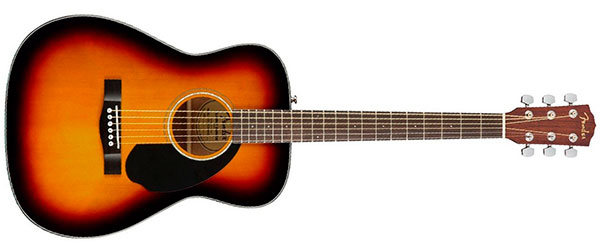
Type: Acoustic guitar (CD-60S dreadnought or CC-60S concert), also available as a CE electro-acoustic.
Key features: Solid spruce top with X bracing, mahogany back and sides and Fender’s Easy-to-play neck with rolled fingerboard edges.
Mat Guitars’ view: The cheapest way to get a solid top, which is why it is the one we recommend most as a first good guitar. The CC-60S concert body is more comfortable if you are of smaller build.
Good to know: The CE version has a Fishman preamp; if you plan to play plugged in, buying it that way costs less than adding a pickup later.
Ideal for: Beginner and intermediate players.
Guide price: from €199.
3. Yamaha FG800II
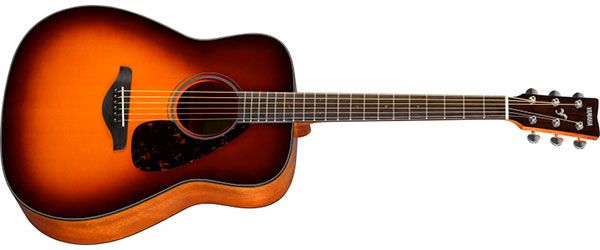
Type: Dreadnought acoustic guitar.
Key features: Solid spruce top, nato back, sides and neck, rosewood fingerboard. A clear, balanced sound with good volume.
Mat Guitars’ view: A best-seller for years because it simply works: well built, stays in tune and does not hold you back as you improve.
Good to know: It has no electronics. If you have small hands, the FG800M version has a concert body.
Ideal for: Beginners who want to get it right first time.
Guide price: from €321.
4. Ibanez AEG50
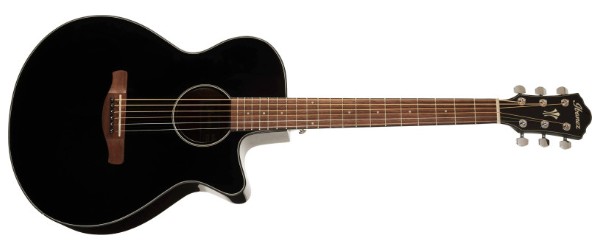
Type: Electro-acoustic guitar with an AEG body and cutaway.
Key features: Spruce top, sapele back and sides, nyatoh neck and walnut fingerboard. Ibanez T-bar II pickup and AEQ-TTS preamp with built-in tuner.
Mat Guitars’ view: The AEG body is slimmer than a standard acoustic, so it plays almost like an electric: very comfortable standing up and on stage. A simple electro-acoustic to plug in that sounds good amplified.
Good to know: Unplugged, it has less bass and volume than a dreadnought: it is designed to be played amplified.
Ideal for: Players starting to play with others or live, and electric players who want a comfortable acoustic.
Guide price: from €279.
5. Lâg T170 Tramontane
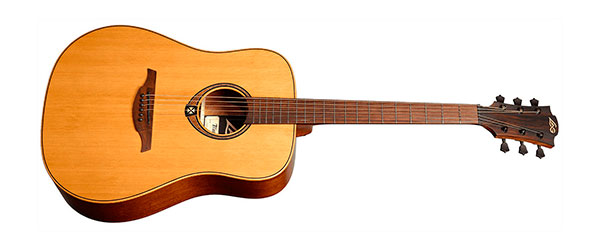
Type: Dreadnought acoustic guitar (T170D), also available as an electro-acoustic with cutaway (T170DCE).
Key features: Solid red cedar top, khaya back and sides, brownwood fingerboard and bridge and a graphite nut. Designed in France.
Mat Guitars’ view: The cedar gives it a warm, round sound from the very first note, lovely for fingerstyle. Its DCE version is our best seller from this selection.
Good to know: Cedar sounds softer than spruce: if you strum hard and want sparkle, look at the Yamaha or the Fender.
Ideal for: Intermediate players who want a step up in quality.
Guide price: from €329 (T170D) and €449 (T170DCE).
6. Takamine GD71CE

Type: Dreadnought electro-acoustic guitar with cutaway.
Key features: Solid spruce top, walnut back and sides, slim mahogany neck and laurel fingerboard. Takamine TK-40D preamp with tuner, three-band EQ, notch filter and mid-contour switch.
Mat Guitars’ view: The most complete stage guitar on the list: the TK-40D lets you shape the sound from the guitar itself and tame feedback in the room. The walnut gives it firm lows and plenty of detail.
Good to know: If we do not have it in the shop at that moment, ask us about the delivery time before buying.
Ideal for: Intermediate and advanced players who play live.
Guide price: from €543.
7. Guild F-250E Deluxe Maple
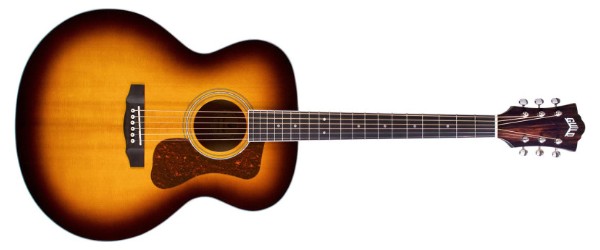
Type: Jumbo electro-acoustic guitar, no cutaway.
Key features: Solid Sitka spruce top, flamed maple back and sides, mahogany neck and pau ferro fingerboard and bridge. GT-1 pickup with volume and tone controls. Westerly series.
Mat Guitars’ view: The jumbo is the biggest body shape: lots of volume and huge lows, perfect for accompanying your singing. The maple keeps the sound clear, so it never gets muddy even when you strum hard.
Good to know: It is big: if you are of smaller build or play seated for long periods, try it first. The electronics are simple (volume and tone, no tuner).
Ideal for: Intermediate and professional players who strum and sing.
Guide price: from €619.
8. Martin DX1E Mahogany
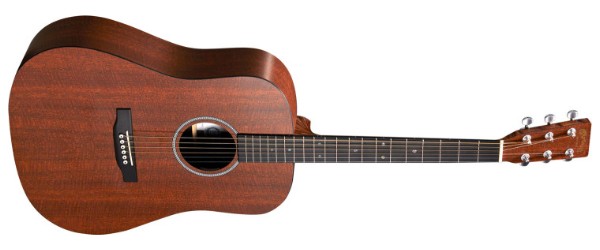
Type: Dreadnought electro-acoustic guitar from Martin’s X Series.
Key features: High-pressure laminate (HPL) top, back and sides with a mahogany pattern, Performing Artist neck and Richlite fingerboard. Martin E-1 electronics with tuner and volume, tone and phase controls. Gig bag included. Made in Mexico.
Mat Guitars’ view: The Martin to take anywhere: HPL will not crack with humidity changes and shrugs off knocks, while keeping the feel and projection of a Martin dreadnought.
Good to know: It is not solid wood, so it does not sound as open as the D-10E or the D-28. If you want the solid-wood Martin sound, step up to the D-10E.
Ideal for: Players who take their guitar out, travel or rehearse.
Guide price: from €672.
9. Fender Acoustasonic Player

Type: Acoustic-electric hybrid guitar (Acoustasonic Player Telecaster).
Key features: Mahogany body with a solid spruce top, rosewood fingerboard and two pickups, piezo and N4 magnetic, with a blend control. Gig bag included. Made in Mexico.
Mat Guitars’ view: One guitar takes you from an acoustic sound to an electric Telecaster tone, without swapping instruments mid-gig.
Good to know: Unplugged it is quiet: it belongs on stage. It plays like an electric, which may feel odd if you come from an acoustic.
Ideal for: Advanced and professional players who gig.
Guide price: from €1,137.
10. Martin D-28
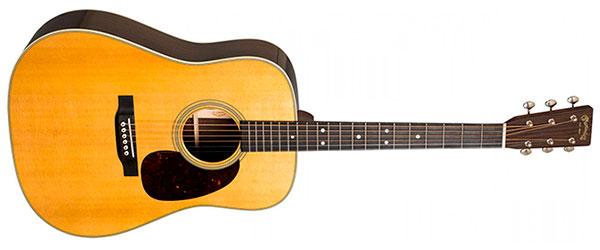
Type: Dreadnought acoustic guitar from the Standard series.
Key features: Solid spruce top, solid rosewood back and sides and ebony fingerboard. Hard case included. Made in the USA.
Mat Guitars’ view: The benchmark dreadnought for almost a century, played by Hank Williams, Johnny Cash and Neil Young: deep lows, big projection and a clarity you notice both on stage and in the studio.
Good to know: It has no electronics and, being solid wood, needs its humidity kept in check. It is a guitar for life: try it in the shop before you decide.
Ideal for: Advanced and professional players.
Guide price: high end, over €3,000.
11. Furch Violet D-ER
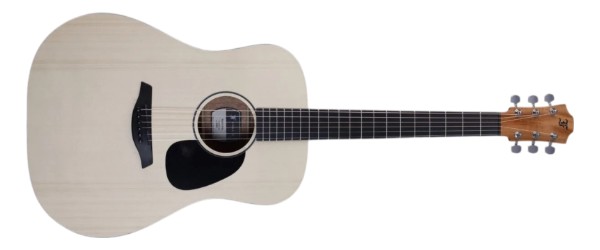
Type: Dreadnought acoustic guitar from the Violet series.
Key features: Solid Engelmann spruce top, solid Indian rosewood back and sides, African mahogany neck with Soft V profile and Brankowood fingerboard. Furch CNR Active system and open-pore finish. High-protection gig bag included. Made in the Czech Republic.
Mat Guitars’ view: All solid, like the D-28, for a lot less. The rosewood gives deep lows and long sustain, and the Engelmann spruce responds beautifully to a light touch: big projection when you strum and clear definition for fingerstyle.
Good to know: It has no electronics. Being all solid, keep an eye on humidity, although the CNR system helps keep the neck stable.
Ideal for: Stepping up to an all-solid guitar for folk, country, acoustic pop or accompanying vocals.
Guide price: from €1,099.
12. Furch Blue Deluxe GC-CM VTC
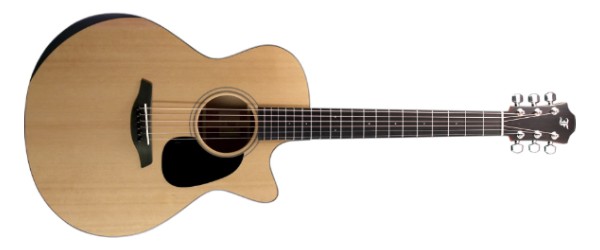
Type: Grand Auditorium cutaway electro-acoustic guitar from the Blue Deluxe series.
Key features: All solid: Western red cedar top and African mahogany back and sides, AA grade. Soft V neck with ebony fingerboard, TUSQ nut and saddle, and LR Baggs EAS-VTC electronics with discreet volume and tone controls. High-protection gig bag included. Made in the Czech Republic.
Mat Guitars’ view: A warm sound that is very responsive to touch, typical of cedar with mahogany. Its Bevel Duo design, with bevels at the forearm rest and on the back, makes it very comfortable over long sessions.
Good to know: Cedar shines when you play with a light touch: if you mostly strum hard, a dreadnought like the Violet D-ER will give you more punch.
Ideal for: Fingerstyle, arpeggios, singer-songwriters, and playing at home, recording or live.
Guide price: from €1,679.
What are the best electro-acoustic guitars?
An electro-acoustic is an acoustic with a pickup and preamp so you can plug it into an amp or a mixing desk. From the list, the Ibanez AEG50 is the most comfortable on stage, the Takamine GD71CE the most complete for live use, the Guild F-250E projects the most, the Martin DX1E is the toughest and the Acoustasonic the most versatile. If you are torn between acoustic and electro-acoustic, we explain it in acoustic vs electro-acoustic: differences and which one to choose. On top of those five, here are three more electro-acoustics: the preamp versions of acoustics from the list, or the step up to Martin’s solid wood:
Read moreShow lessLAG T170DCE
Best for: Players who want the warm T170 sound with a cutaway and Astro-Lâg preamp.
Why we like it: Solid red cedar top; it is our best seller from this selection.
Guide price: from €449.
Fender CD-60SCE All Mahogany
Best for: Beginners who want to plug in from day one.
Why we like it: Solid mahogany top and Fishman CD-1 preamp: a warmer, darker sound than the spruce CD-60S.
Guide price: from €304.
Martin D-10E
Best for: Players looking for a solid-wood Martin to gig with.
Why we like it: Solid spruce top, sapele back and sides and Martin E-1 electronics with a soundhole tuner. Gig bag included.
Guide price: from €1,077.
You will find them all in our electro-acoustic guitars section. And if you are after an all-solid upper mid-range electro-acoustic, see the Furch Blue Deluxe GC-CM VTC (no. 12) in the list.
Read moreShow lessWhich acoustic guitars are people buying today?
The best sellers combine a solid top, a sensible price and the option to plug in: more and more players want a single guitar that sounds good at home and that they can take to a rehearsal or a jam. That is why half of this list is electro-acoustic.
The other trend is tougher guitars, like the HPL Martin DX1E, for players who take their guitar out. And if you want to try a few before you decide, come to our Seville shop: call us first and we will confirm the model you want is there.
Read moreShow lessFrequently asked questions
What is the best value acoustic guitar?
For most people, a Fender CD-60S (from €199) or a Yamaha FG800II (from €321): both have a solid spruce top, which is what improves the sound most. If you can go up to around €330, the LAG T170D, with a solid cedar top, sounds warmer.
Acoustic or electro-acoustic to start with?
If you will only play at home, go acoustic: for the same money you get a better guitar. If you will play with others, record or go on stage, choose an electro-acoustic such as the Fender CD-60SCE or the Ibanez AEG50. We explain it in more detail in acoustic vs electro-acoustic.
Which body size should I choose?
The dreadnought is the most versatile and has the most bass, good for strumming. Concert and auditorium shapes (like the AEG50) are more comfortable and balanced for fingerpicking. The parlor is small, ideal for travel, and the jumbo gives the most volume.
How much should I spend on an acoustic guitar?
Between €200 and €350 you get solid-top guitars that will last you years. Between €400 and €700, electro-acoustics with a good preamp for live use. From around €1,000, solid wood throughout, like the Martin D-10E, the Furch Violet D-ER or the D-28.
Solid or laminated top?
A solid top vibrates more, sounds more open and improves with age. A laminated (or HPL) top sounds a little less lively, but copes better with knocks and humidity changes, which makes it a good choice for travel or a second guitar.
Still have questions?
If you need advice, remember that we are here to help you with any inquiry you may have through the following channels:
- Phone
- +34 954 902 550
- info@matguitars.com
- +34 647 639 532
- Contact
- Contact form
Meet the expert behind this article

Gonzalo Cosín
🎸 Guitars, sound and studio gear specialistA sound engineer and guitarist, he combines musical judgement with a practical view of gear. He'll help you with questions about guitars, sound and setups for playing, recording or amplifying yourself properly.